Tips for a comfortable, happy and safe visit ...
Mosquitoes
There are three groups of mosquito that are a nuisance to man.
In the proboscis there are six slender lancets which are modified mouthparts used to pierce the skin and inject the anti-coagulant saliva. Disease organisms are then injected with the saliva.
In the proboscis there are six slender lancets which are modified mouthparts used to pierce the skin and inject the anti-coagulant saliva. Disease organisms are then injected with the saliva.
Satellite Scanning of Africa for Malaria
An initiative to create a continental scale Geographic Information System (GIS) of malaria risk in Africa is being co-ordinated through regional collaborators and data co-ordinators at centres in Africa. GIS is a computer=based tool which collects data from a variety of sources and encodes, analysis, overlays and displays the derived data in map form.
An on-line digital atlas of malaria risk areas will also provide other useful data relating to drug resistance and mosquito distribution. The main objective is to create an information platform which can be used to combat malaria and will provide a vital source of information to travellers, eco-tourism and economic investors and developers.
An initiative to create a continental scale Geographic Information System (GIS) of malaria risk in Africa is being co-ordinated through regional collaborators and data co-ordinators at centres in Africa. GIS is a computer=based tool which collects data from a variety of sources and encodes, analysis, overlays and displays the derived data in map form.
An on-line digital atlas of malaria risk areas will also provide other useful data relating to drug resistance and mosquito distribution. The main objective is to create an information platform which can be used to combat malaria and will provide a vital source of information to travellers, eco-tourism and economic investors and developers.
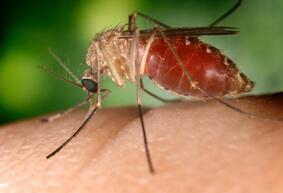
Culex Mosquito
|
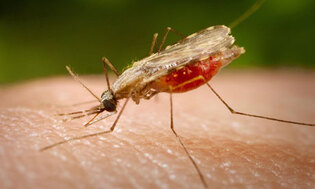
Anophelese Mosquito
|
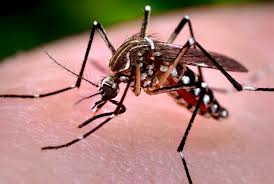
Aedes Aegypti Mosquito
|
|
SEX
Male ......................................... Female .................................... |
IDENTIFICATION
Feathery antennae ..................... Thread-like antennae ................. |
FOOD
Nectar - flowers and juices Blood |
|
SPECIES
Culex ........................................ Anophelese ............................... Aedes Aegypti ........................... |
IDENTIFICATION
................................................... Spotted wings and raised posture at rest ............................................ Black and white bands on legs and abdomen .................................... |
DISEASES
Elephantiasis Malaria Dengue Fever Yellow Fever Dengue Fever Elephantiasis |
How a Malaria Carrying Mosquito Works ...
As a female Anopheles mosquito with the parasite drinks her fill, she transmits many threadlike structures, call sporozoites, into the new host.
As a female Anopheles mosquito with the parasite drinks her fill, she transmits many threadlike structures, call sporozoites, into the new host.
- These sporozoites travel to the liver, where they multiple and form another kind of spore called a merozoite.
- The merozoites enter the bloodstream and penetrate the red blood cells, where they devour haemoglobin, the chemical that transports oxygen.
- When the blood cell disintegrates, the metozoites - now multiplied 16-fold - escape and infect other blood cells.
- A few merozoites form a sexual stage, which can be sucked up by another mosquito taking a meal.
- Two sexually active merozoites meet in the mosquito's gut and produce a new generation of parasites.
- This mosquito can transmit the infection only if she sucks more blood from an uninfected person before she dies.